The Myth That Attendance Equals Influence
Attendance at a public meeting shows who had access, not who shaped the decision. Learn how to tell participation from actual decision authority.

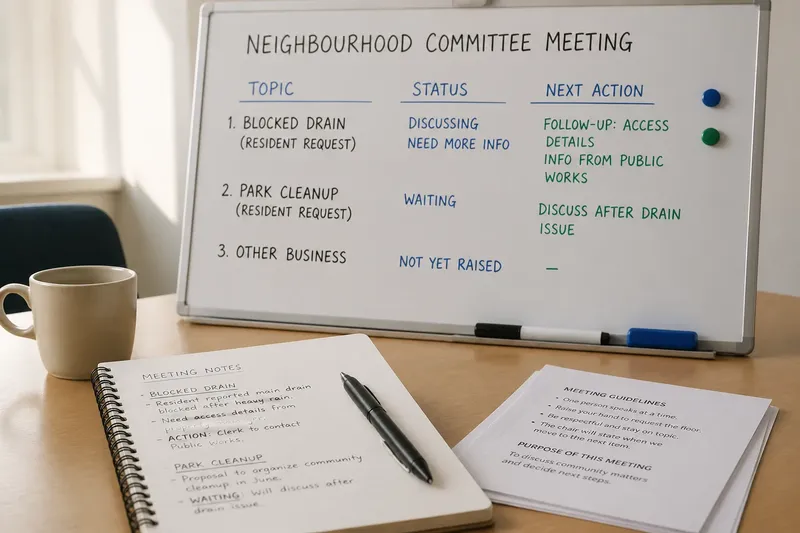
You sit through a neighborhood meeting, listen to residents speak, and watch officials move to the next item. The room was open, but what did being there change? Attendance at a public meeting is evidence of presence. It is not, by itself, evidence of influence.
That distinction matters because civic participation can happen at several points between raising a concern and making a public decision. A person may be able to enter the room, speak, submit a comment, or receive a response without having authority over the outcome. To understand what influence participants had, ask what could change, who could change it, and what happened to their contributions.
What does attendance at a public meeting actually show?
Attendance establishes that a person was present, either in the room or through an available remote option. It may also show that the institution provided a route for observing the discussion. Those are meaningful forms of access, but they tell little about the participant’s role in the decision.
Public meetings can serve different purposes. Some are designed to inform people about a proposal. Others invite comments, gather local knowledge, or allow a decision-making body to debate and act. A meeting may do more than one of these things, but an open door does not make every attendee a decision-maker.
Consider the difference between a public hearing and a board vote. At a hearing, residents may describe how a proposed change could affect a bus stop or a nearby business. At a later vote, board members may have authority to approve, revise, defer, or reject the proposal. The hearing can inform the discussion without transferring that authority to the speakers.
How are access, participation, and authority different?
These terms describe related but separate parts of public decision-making:
- Access means people can learn about or enter a process. Meeting notices, accessible rooms, interpretation, remote attendance, and public documents can all affect access.
- Participation means people can contribute through a defined channel, such as public comment, a written submission, a facilitated workshop, or a resident advisory group.
- Influence means a contribution has a discernible bearing on how the issue is understood, what options are considered, or what decision is made. Influence need not mean that the participant gets the outcome they requested.
- Decision authority is the formal power to choose, approve, fund, or direct an action. It usually belongs to a named public body or official under the rules that govern the matter.
The boundaries can overlap. A committee might invite residents to help shape alternatives, while a council retains the final vote. Participants then have a role in shaping the options, but not the same authority as the council. Describing the process accurately means naming both roles instead of treating them as interchangeable.
What can participants influence without holding the final vote?
Influence is not limited to casting a vote. A resident’s account may alert staff to a practical problem that was missing from a proposal. Several comments may prompt officials to explain an assumption, compare another option, or change the timing of a decision. Such effects can matter even when the final choice remains with an elected board or authorized administrator.
Still, a contribution being heard is not the same as it being used. A chair may acknowledge a comment, and staff may record it, while the proposal proceeds unchanged. A useful account of participation asks what happened after the contribution: Was it considered? Did it lead to a response, a revised option, or a stated reason for keeping the original plan?
Say a neighborhood group attends a transit forum because a proposed stop relocation may make an existing walking route harder for people with mobility needs. The group describes the route and asks staff to examine a nearby alternative. If staff adds that alternative to the options for board review, participants have influenced the set of choices, even though the board still decides. If the meeting only records comments and no one explains whether the alternative will be considered, attendance alone does not tell the group what effect its input had.
How can you tell what influence a meeting allows?
Before judging a meeting by turnout or speaking time, look for its stated purpose and the next stage in the process. A notice may say the event is informational, consultative, or a formal hearing. Those labels are clues, not a full account. The practical question is what the organizers are asking participants to do and what the responsible body can still change.
- Find out which body or official has authority over the decision.
- Check whether the meeting gathers comments, develops options, makes recommendations, or takes a formal action.
- Ask whether participants can respond to one another or only address officials in a set time.
- Look for a public record, such as minutes, written comments, staff summaries, or a report back.
- Ask when the decision is expected and how people can see what happened to their input.
These checks help separate an opportunity to speak from a meaningful route into the decision. They also make it easier to identify where a process is limited. For example, a consultation held after the available options have already been fixed may still help explain implementation concerns, but it offers less room to shape the basic choice.
What questions clarify influence in a public process?
Does public comment mean officials must follow what speakers request?
Usually, public comment gives people an opportunity to express views, not a right to determine the outcome. The responsible body may consider comments alongside its duties, available options, and other information, then explain its decision.
Can participants influence a decision without voting on it?
Yes. Participants may shape which problems are recognized, which alternatives receive attention, or what conditions officials consider. The final authority can remain with a public body while the discussion is still affected by public input.
What does it mean if a meeting’s minutes record a comment?
Recording a comment shows that it entered the meeting record, but does not establish that it changed the analysis or decision. Look for a response, a reference in later materials, or a clear account of how the issue was handled.
Who should explain what happened to public input?
The body conducting the process should make its procedure and follow-up clear, though responsibility may be shared between staff and the officials who decide. Ask the meeting contact or clerk where comments are documented and how the decision-maker will receive them.
Why does the distinction matter for trust?
When an institution presents attendance as proof that the public shaped a decision, it can overstate what participants were able to do. People may have received access and a chance to speak, yet still have no clear route to learn whether their concerns mattered. Naming the limits honestly is more respectful than implying that presence equals shared control.
It is also not worth treating every meeting as a referendum on whether officials listened. Some meetings are meant to explain a service change or collect information before options are ready. The useful question is whether the purpose was stated clearly and whether the process matched it. A listening session should not be mistaken for a vote, and a formal vote should not be described as public co-decision if residents had no decision authority.
For anyone trying to understand attendance at a public meeting, keep the terms precise: access opens the process, participation creates a channel for input, influence concerns whether that input shapes the work, and authority identifies who can make the decision. At the next meeting you attend, note who has the power to act and what happens after public comment. That small distinction can tell you more than a full room ever could.